
When Fintech Meets Sport: A New Era of Sponsorship
Published on
In this Insight:
The rise of fintechs companies that are reinventing financial services through technology is also redefining the way brands engage with sports. Highly connected, agile, and fan-experience oriented, they find stadiums, racetracks, and arenas the perfect stage to embody their vision: modern, accessible, user-focused finance.
From instant payments to digitized loyalty programs and co-branded banking cards, the convergence of fintech and sport is no longer a mere marketing experience. It has become a new territory for expression, where economic performance meets sporting performance. For the 2024/25 season, fintech and crypto brands spent over $565 million globally on sports sponsorship, with football alone accounting for 59% of these partnerships.
A Natural Link Between Innovation and Emotion
Fintech and sport have more in common than one might think. Both celebrate performances, precision, and passion. On the one hand, companies are revolutionizing finance through technology. On the other hand, clubs and athletes inspire and captivate millions of fans worldwide. Together, they create a new dynamic in sponsorship: agile, technological, and deeply innovative. Revolut understood this by partnering with several major sports players internationally. In France, Revolut has notably partnered with Stade Toulousain until 2026. With a projected revenue of $4 billion in 2024, the neobank demonstrates its ability to combine economic growth and influence. On an international scale, it develops partnerships where the demands of various sports align with the innovation image of a global neobank. The message is clear: fintechs aim to be perceived as trustworthy, high-performing, and forward-looking brands.
For sports stakeholders, this convergence is equally strategic. These new partners not only bring financial resources but also provide tangible solutions to current challenges: digital payments, treasury management, ticketing, integrated loyalty programs, and more.

Fintech as a Catalyst For New Opportunities
The presence of fintechs has now become a sustainable pillar of the French sports landscape. Today, they are genuine players in fan experience and club development.
From football to rugby and cycling, financial actors are establishing themselves firmly across all fields. Their approach is twofold: supporting performance while simplifying daily operations. Clubs benefit from modern payment solutions, automated accounting tools, and redesigned fan experiences. For fintechs, this represents a unique opportunity to embed their services into fans’ daily lives and build trust-based relationships. The partnership between Revolut and the NBA Paris Game perfectly illustrates this marketing logic. It allowed the neobank to launch a campaign in France, including the release of co-branded Revolut x NBA cards, offering exclusive benefits to cardholders. Revolut successfully created a desirable object linking to basketball and fintech. Such initiatives transform loyalty into a concrete and engaging program, where technology becomes a vehicle for experience and a sense of belonging for fans. These agreements open an unprecedented field of innovation for clubs, leagues, and federations, where technology, transparency, and engagement converge.
Like Revolut in basketball, other French clubs are turning to fintech solutions to enhance fan experience. For example, Paris FC partnered with DeluPay, an innovative digital payment solution. Facilitated by SPORTFIVE, this partnership allows the club to rethink fan experience by streamlining transactions within the stadium via a QR code system, providing supporters with a faster and more intuitive purchasing journey. “We are delighted to welcome DeluPay as an official partner of Paris FC.
Following the introduction of free ticketing, this partnership offers our supporters an innovative and accessible experience across our stadium points of sale,” emphasizes Pierre Ferracci, President of Paris FC. Beyond visibility, this collaboration aims to create a connection: between technology and the field, between clubs and fans. It reflects an ethos of exchange and shared values, serving to enrich fan experience. Technology thus becomes a vector of usability and simplicity, while the emotion of sport transforms into a lever for engagement and loyalty.
Activations stemming from fintech partnerships allow millions of fans to engage with finance in a more intuitive, often playful way. But the benefits go beyond visibility. These partnerships aim to strengthen brand awareness among fans while promoting financial literacy to a younger audience. The collaboration between Swile and MHSC reflects this approach by bringing innovative fintech closer to a highly engaged local sports community. Pennylane provides another perfect example. By becoming an Official Partner of the TOP 14 until 2028, the French fintech asserts its desire to establish a long-term presence in professional sports.
Designed by SPORTFIVE, this partnership enables Pennylane to enhance its reputation while directly addressing a community of enthusiasts: “Rugby is known for its values of commitment, teamwork, respect, and discipline. [...] By associating Pennylane with the TOP 14, we want to support and encourage French business leaders across our territories. And to reaffirm that the upcoming electronic invoice reform is not just about tools. Having an accountant’s guidance makes all the difference, especially when everything changes.” — Arthur WALLER, CEO and co-founder of Pennylane. The fintech’s ambition is to democratize itself, presenting a more accessible, popular, and user-centered image.

Global and Multi-Club Strategies
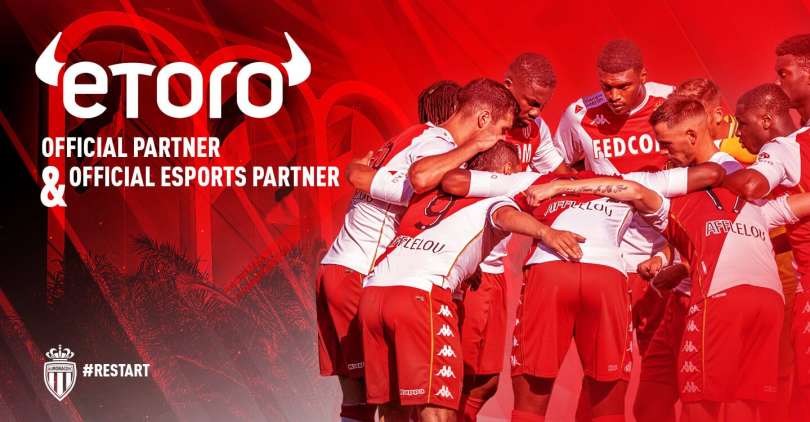
As the sector matures, strategies are becoming more refined. Some fintechs adopt a multi-club approach to extend their presence and leverage activations. With SPORTFIVE’s support, eToro continues this strategy in France, enabling year-round presence across multiple territories. The brand has partnered with emblematic clubs such as Olympique Lyonnais, LOSC, AS Monaco, and Olympique de Marseille. These alliances allow the brand to maintain continuous visibility while tailoring its messaging. eToro reports that its club sponsorships have made its brand “always on across the year,” with visibility in approximately 35% of matches over ten months thanks to its multi-club approach.
This strategy offers fintechs global exposure while allowing activations to adapt to local cultures. For clubs, it guarantees a stable partnership supported by strong, growing brands. For fans, it creates a seamless experience: whether supporting Monaco, Lyon, Marseille, or Lille, the brand becomes a unifying link among supporters.
Benefits for Sports Stakeholders
The arrival of fintechs in sports is fundamentally redefining sponsorship, moving beyond mere visibility to establish genuine strategic partnerships. These alliances generate tangible, long-lasting benefits while strengthening fan engagement. They also provide access to advanced technologies that optimize financial management and international flows, fostering professionalization of the sector. Moreover, athletes themselves become key players in this transformation, leveraging personalized services to enhance their image, manage their income, and interact more closely with their fans. Sponsorship is thus evolving into an ecosystem of shared opportunities, where every participant gains: fintechs build credibility, sports gain modernity, and fans enjoy a smoother, more personalized experience connected to their favorite club.
The convergence of fintech and sport is far more than a trend: it is a fundamental movement. In a time when brands seek meaningful and innovative partnerships, sport provides an ideal stage to express their vision and create lasting connections with their audience. Fintechs bring technology, creativity, and execution speed. Clubs offer passion, emotion, and community power. Between them, an alchemy emerges smarter, more useful, and more engaging sponsorship. In stadiums and on digital platforms alike, a new era is opening. Those who can unite these two worlds today may well be the first to invent the sponsorship of tomorrow.
A comprehensive marketing agreement in sports means that a sports organisation or rightsholder partners with an external party, such as an agency, to create, deliver and evaluate their marketing strategy.
The details of this agreement varies depending on the rightsholder and the external party, but typically includes the external party utilising their expertise and experience within a particular field, such as sales or marketing, to help benefit the rightsholder.
This agreement typically also sees employees from the external party work as part of the rightsholder’s organisation, often within the same office and teams.
Establishing a partnership with an athlete, club, or federation involves a strategic approach and effective negotiation. Here are steps for each:
Athlete Partnership
Research: Identify athletes whose values align with the brand. Consider their audience demographics and market relevance.
Contact and Proposal: Reach out to the athlete or their management with a well-crafted proposal outlining the partnership benefits, objectives, and terms.
Negotiation: Discuss terms such as sponsorship duration, financial arrangements, and activation plans. Ensure mutual understanding and agreement.
Club Partnership
Research and Alignment: Research clubs that resonate with the brand's values and target audience. Align objectives with the club's goals.
Engage with Key Stakeholders:Reach out to club executives or sponsorship managers to discuss potential collaborations.
Customised Proposal: Present a tailored proposal highlighting the benefits, including branding opportunities, fan engagement, and joint marketing initiatives.
Federation Partnership
Understand Objectives: Understand the federation's goals and priorities. Align brand objectives with the federation's mission.
Engage with Decision-Makers: Reach out to key decision-makers within the federation to discuss potential partnerships.
Collaborative Planning: Work together to create a mutually beneficial partnership plan, considering financial contributions, promotional activities, and long-term goals.
Building relationships, demonstrating the value of the partnership, and negotiating terms collaboratively are key elements in establishing successful partnerships in the sports industry.
A sports marketing agency is a specialised firm that focuses on promoting and enhancing the brand image of sports-related entities, including athletes, teams, leagues, and sports events.
These agencies operate at the intersection of sports and marketing, offering a range of services to clients looking to maximise their visibility and commercial success within the sports industry.
Sports marketing agencies devise and implement strategies to build and manage brand partnerships, negotiate sponsorship deals, organise promotional events, and leverage digital and traditional media for effective outreach.
They play a crucial role in creating and executing marketing campaigns that resonate with sports enthusiasts and broader audiences, aiming to boost engagement, revenue, and overall brand value for their clients in the dynamic and competitive world of sports.
